Kenyan vigilantes taking on avocado gangs

Kenya’s avocado sector has become so lucrative that organised criminal gangs have begun to target growers.

This is because the fruit from just one tree can pay for the private education of a secondary school student for a whole year – up to $600 (£450).

With the demand for the fruit growing in the US and Europe, Kenya overtook South Africa last year to become the continent’s top avocado exporter.

Vigilante groups are now being formed to protect the crop, known as “green gold”.

As night falls on a fairly large farm in the central county of Murang’a, six young men dressed in thick raincoats and armed with torches, machetes and clubs start their shift.

They have been hired to guard the farm and its precious avocados.

It is dangerous work – and people can get hurt and even killed.
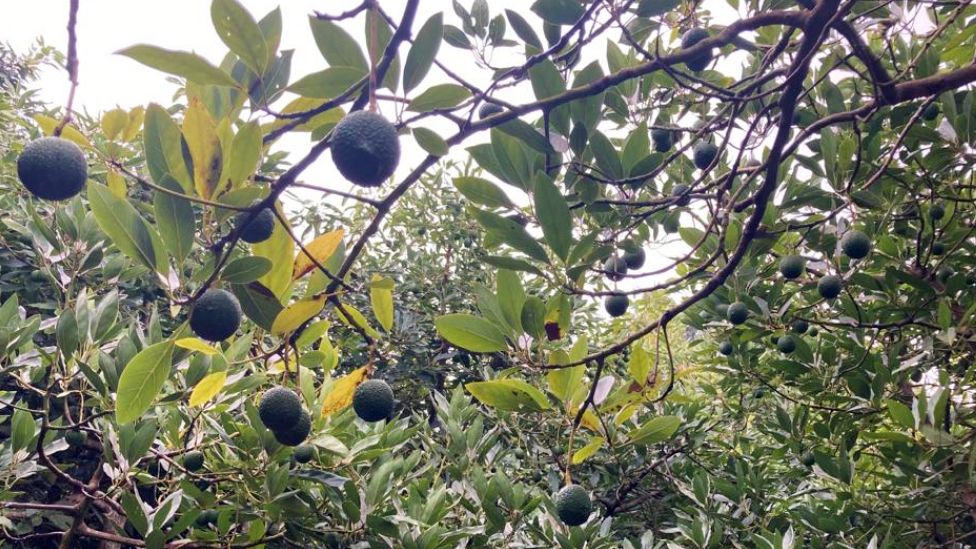
Avocado trees
Image caption,Farmers are having to harvest early in order to save their crops from the thieves

“It was either us or them unfortunately and we had to protect ourselves,” one of them tells me, referring to a recent incident in which a suspected avocado thief was killed.

The owner of the farm, which is about half an acre – or half the size of a football pitch, says he has had to take action as he has fallen victim to the thieves.

“You can fence the entire farm but that won’t stop them,” he says, showing me where his barbed wire fence has been cut.

“You spend an entire season taking care of your crops, then in a single night all your fruits are stolen in a matter of hours.”

Another of the vigilantes who is mending the fence agrees: “They’ll still cut it and steal what they want.”

He worries how the community will suffer as most people survive on the trade – many work for those with bigger farms, while most families also have a couple of trees themselves.

“If we sleep, our fathers and mothers won’t have a cent,” he says.

Their watch will end at daybreak.

Avocados tend to be harvested in Kenya between February and October – but the thieves have been targeting the immature fruit.

In an effort to clamp down on the black market, the authorities have imposed a ban on exporting avocados from November until the end of January.

But it is having little effect on the ground – in fact farmers like those in Murang’a county are having to harvest early in order to save their crop from the avocado cartels.

Leaving them on the trees is simply an invitation to the thieves.

Flying drones

In Meru county – about 100km (60 miles) further north – the situation is much worse. We arrive as European buyers are in the area.

This means some avocado farmers there, like Kinyua Mburugu, are allowed to harvest early.

So in a single day, thousands of hectares of Hass avocados are picked, selling for up to 19 Kenyan shillings ($0.17, £0.12) each.

The avocados are assessed to ensure quality at the local distribution centre – because if picked too early the fruit will not ripen at all.Kinyua MburuguBBCIn the next five years, I don’t think many people here will have tea farms. Avocados are the way to go”Kinyua Mburugu
Avocado farmer

For Mr Mburugu, the decision to pick early was taken to keep the thieves at bay.

But in the future he intends to take on the gangs by using a computer purchased through his local avocado co-operative society.

He will connect it to CCTV cameras that he is putting up around his 10-acre (4.04-hectare) farm.

From the comfort of his living room, he intends to keep on eye on his more than 200 mature trees, helped by his tech-savvy son, a film studies graduate.

“My son is thinking of flying drones around so we can have 24/7 surveillance of our farm,” Mr Mburugu says.

“Isn’t that expensive?” I ask.

“No, no… the savings will justify everything.”

Mob justice

As we speak, he receives a phone call. The vigilantes have caught several men who rented a house in the centre of Meru town, part of the cartel stealing fruit.

Later, Julius Kinoti, who heads the neighbourhood watch security team, says they found that the house was full of sacks of stolen avocados.
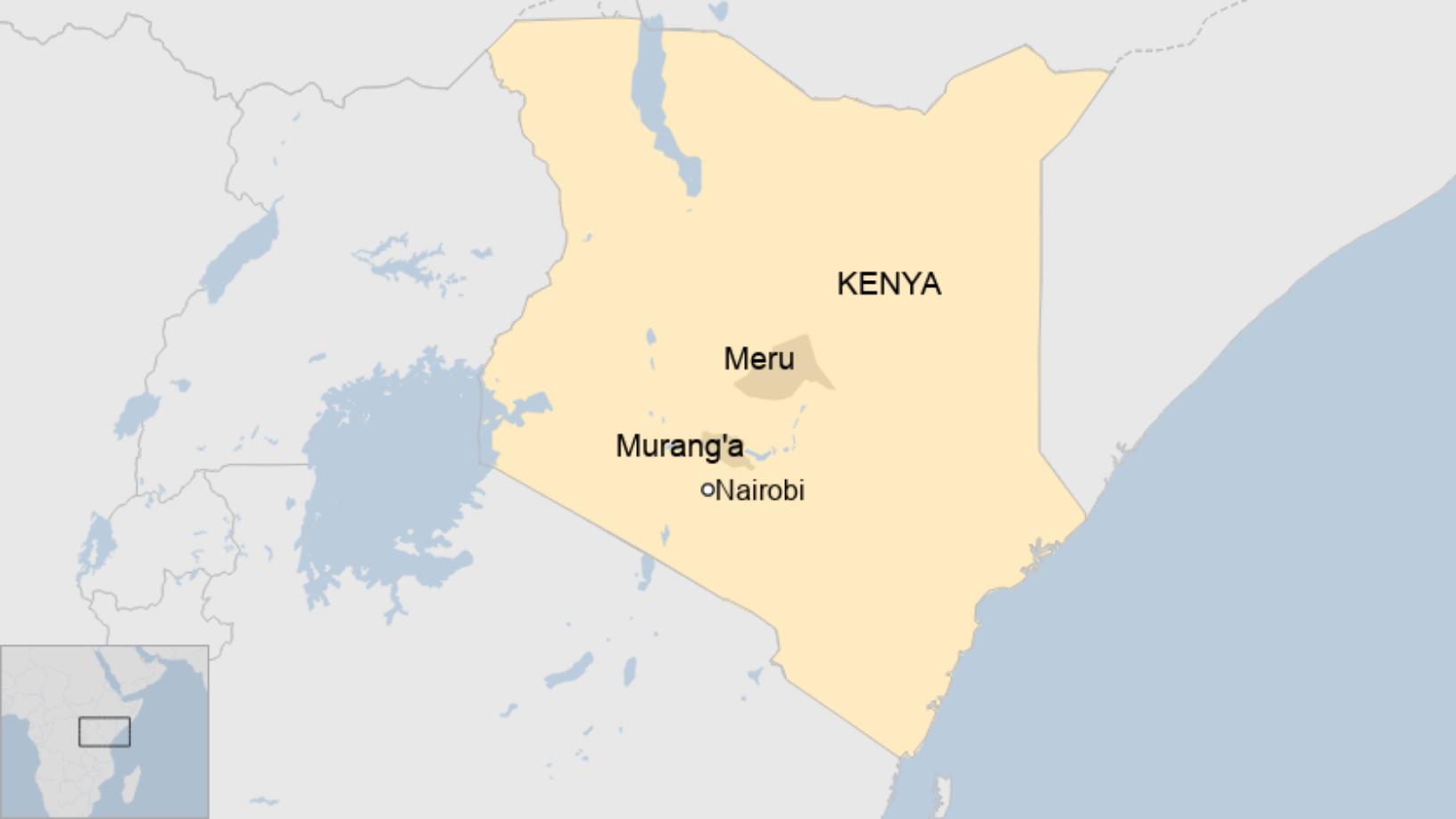
Map

They alert the police but he warns the authorities need to do more about the problem as people could take matters into their own hands.

“That night we caught those thieves, if I had blown the whistle to alert people, villagers would have come and would have killed them – mob justice – because people are angry.”

Kenya’s avocado trade is still in its infancy, but more and more farmers are deciding to invest in avocados.

Last year, the fruit earned Kenyans farmers $132m (£100m) from exporting about 10% of the harvested crop, according to the trade ministry.

“If we ensure quality control, we will definitely reach the heights of the big producers like Peru and Brazil,” says Mr Mburugu.

“In the next five years, I don’t think many people here will have tea farms. Avocados are the way to go.”

He uprooted his fields of tea a few years ago – it is not a move he regrets, he just hopes he can keep the avocado cartels at bay.

Source: BBC Africa News

Zimbabwe: What it is like when parents manage their own children in the music industry.

Tammy Moyo, source: Instagram

23 year old Tammy Moyo shares her experience in the music industry which has been quite a long career for her. Tammy started singing at the age of seven and it is thanks to her parents who identified the talent and nurtured it, one thing that is commonly rare especially for musicians in her type of music.
Tammy is born to a StarFm radio presenter in Zimbabwe Richard Kohola and Doris Moyo who are her music managers. Being so talented, she recorded her first album at the age of thirteen and by the time she reached twenty she was nominated in the category of the best female artists in Southern Africa at the Afrima awards.
While sharing her experience Tammy says,”It isn’t always easy getting your parents to see you into a professional adult.” She also goes on saying how her father has been her greatest critic yet her biggest fan,”I consider him a music genius, my biggest critic and my fan at the same time.”
At such a tender age, Tammy has collaborated with some of the big African musicians who include the likes of the late Dr. Oliver Mtukudzi, Mafikizolo, Sho Madjozi, Burna Boy, among other names.
Being a versatile musician, Tammy has worked on a number of different African beats with different types of messages. As she speaks on one of her hits “Kwandinobva” (where I come from), Tammy emphasizes on self esteem and confidence and not doubting oneself. On that she comments,” I think I’m beginning to accept myself a whole lot more and listen to my own voice a whole lot more.”
Interestingly, the music industry is associated with a certain type of dressing, certain types of dance moves like twerking which has become popular. Now with her parents Tammy speaks of quite an opposite expectation and she says in terms trending moves her father actually encourages her to go for them, be it a piece of clothing to shaking her a*$s.
Tammy Moyo keeps making waves in the Zimbabwean music industry and the African plateau. There are also a number young artists with fresh talent rising in Zimbabwe and some might yet have to be discovered if parents take it to supporting their children.

Ethiopia Accuses WHO Director Tedros of misconduct

The Ethiopian government has accused the World Health Organization director of “misconduct“ after he criticized conditions in the Tigray region.

Tedros Adhanom Ghebreyesus was nominated by the Ethiopian government to be the head of the U.N. health agency four years ago, but claims he has “not lived up to the integrity and professional expectations”. He has been accused of interfering in Ethiopia’s internal affairs, according to a press release issued on Thursday by the Ethiopian ministry of foreign affairs.

“Through his acts, (Tedros) spread harmful misinformation and compromised WHO’s reputation, independence, and credibility,” the statement reads.

Tedros, has on many occasions criticized the situation in his home country and called for humanitarian access to the conflict-ridden region of Ethiopia.

“Nowhere in the world are we witnessing hell like Tigray,” said Tedros at a media briefing Wednesday.

He made reference to a memo WHO had received recently from a physician in the region, which indicated, health authorities had run out of basic medicines for diseases including diabetes and were now using expired stocks and intravenous fluids.

Tedros accused Ethiopia of blocking international access to Tigray, saying that WHO had not been allowed to send any supplies to the region since July.

However, The Ethiopian government perceives this Tedros was using his office “to advance his political interest at the expense of Ethiopia” and said he continues to be an active member of the Tigray People’s Liberation Front; Tedros was foreign minister and health minister when the TPLF dominated the country’s ruling coalition.

Food shortage

On Friday, the U.N. World Food Program warned its food assistance in northern Ethiopia is “about to grind to a halt because intense fighting has blocked the passage of fuel and food.” No WFP convoys have reached the Tigray capital since mid-December, it said in a statement, “and the last of WFP’s cereals, pulses and oil will be distributed next week.” Stocks of nutritionally fortified food to treat malnourished children and women are depleted, it said.

“We’re now having to choose who goes hungry to prevent another from starving,” said Michael Dunford, WFP’s regional director for Eastern Africa. The WFP says nearly 10 million people need food assistance.

In a separate statement on the war, the U.N human rights office said at least 108 civilians have reportedly been killed in Tigray this year by airstrikes “allegedly carried out by the Ethiopian air force.” It warned of possible war crimes.

The airstrikes have continued despite a shift in the war in recent weeks, with the Tigray rebels retreating into their region and Ethiopian forces saying they wouldn’t pursue them further there. Meanwhile, Prime Minister Abiy Ahmed has spoken of reconciliation and national dialogue.

In September, France, Germany and other European countries nominated Tedros for a second term as WHO’s director-general, the first time any candidate was not supported by his or her home country. Tedros is expected to be confirmed for another five-year term in May, as he is running unopposed.

Ethiopia: UN Address Nation’s Air Strikes; Says Dozens Killed This Month

UN says at least 108 civilians have been killed in Tigray since the new year began as it warns aid distributions are at an all-time low.

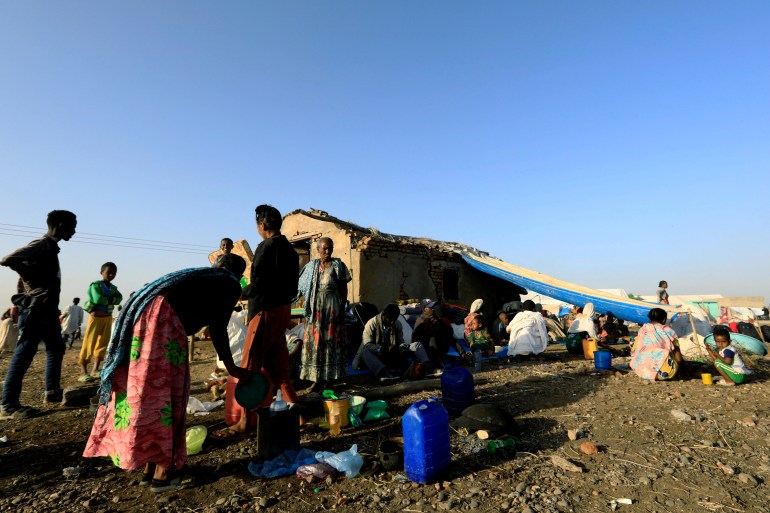
FILE PHOTO: Ethiopians who fled the ongoing fighting in Tigray region, gatherl in Hamdayet village near the Sudan-Ethiopia border, eastern Kassala state, Sudan November 22, 2020. REUTERS/Mohamed Nureldin Abdallah/File Photo
The government has previously denied targeting civilians in the 14-month-old conflict with rebellious Tigrayan forces [File: Mohamed Nureldin Abdallah/Reuters]

The UN human rights office expressed alarm at “multiple, deeply disturbing reports” of air strikes in the Tigray region of Ethiopia, saying at least 108 civilians had been killed since the start of January.

Liz Throssell, an Office of the United Nations High Commissioner for Human Rights (OHCHR) spokesperson, described numerous attacks including on a private minibus, an airport and a camp for displaced people. At least 59 people died in the camp strike, making it the most lethal so far.

“We are alarmed by the multiple, deeply disturbing reports we continue to receive of civilian casualties and destruction of civilian objects resulting from air strikes in Ethiopia’s Tigray region,” Throssell told reporters in Geneva.

“At least 108 civilians have reportedly been killed and 75 others injured since the year began as a result of air strikes allegedly carried out by the Ethiopian air force.”

‘Dialogue and reconciliation’

UN Secretary-General Antonio Guterres said later on Friday he was “heartbroken by the suffering of the Ethiopian people”, appealing again for the parties to stop fighting.

“All people who need humanitarian aid must receive it as quickly as possible. It’s time to start dialogue and reconciliation,” he posted on Twitter.

Throssell called on Ethiopian authorities and their allies to ensure the protection of civilians in line with international law which requires verification that targets are military.

“We call on the Ethiopian authorities and their allies to ensure the protection of civilians and civilian objects, in line with their obligations under international law,” she said.

“Failure to respect the principles of distinction and proportionality could amount to war crimes.”

Ethiopia’s military spokesman Colonel Getnet Adane and government spokesman Legesse Tulu did not immediately respond to a request for comment on the alleged strikes.

The government has previously denied targeting civilians in the 14-month-old conflict with rebellious Tigrayan forces. The Tigray People’s Liberation Front (TPLF) that is fighting the central government is not believed to have the air power to carry out strikes.

Meanwhile, the UN’s World Food Programme (WFP) said at the same briefing its distributions were at an all-time low, with the escalation of the conflict meaning no WFP convoy has reached the Tigrayan capital, Mekelle, since mid-December.

“Life-saving food assistance operations in northern Ethiopia are about to grind to a halt because intense fighting in the neighbourhood that has blocked the passage of fuel and food,” WFP spokesman Tomson Phiri told reporters.

“After 14 months of conflict in northern Ethiopia, more people than ever need urgent food assistance. With no food, no fuel, no access, we are on the edge of a major humanitarian disaster.”

Source: Al Jazeera Media Network

Design a site like this with WordPress.com
Get started